

Stuck in your head?
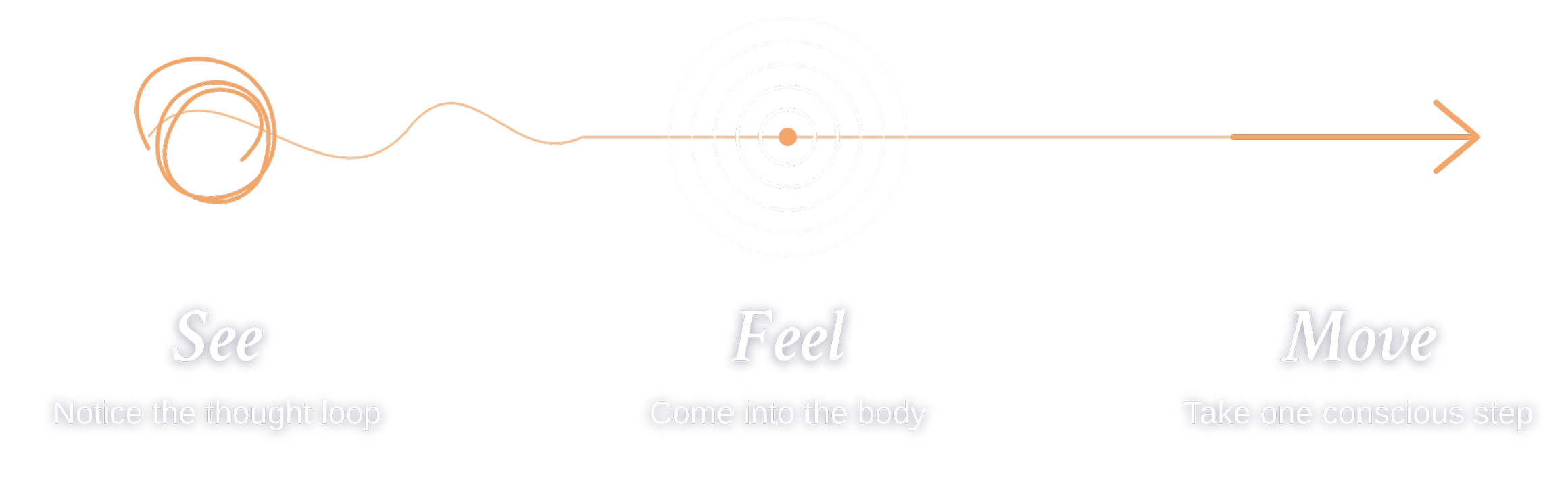
I teach people to notice the thought loop, feel and understand what's underneath it, then take one clear next step.
*for a limited time
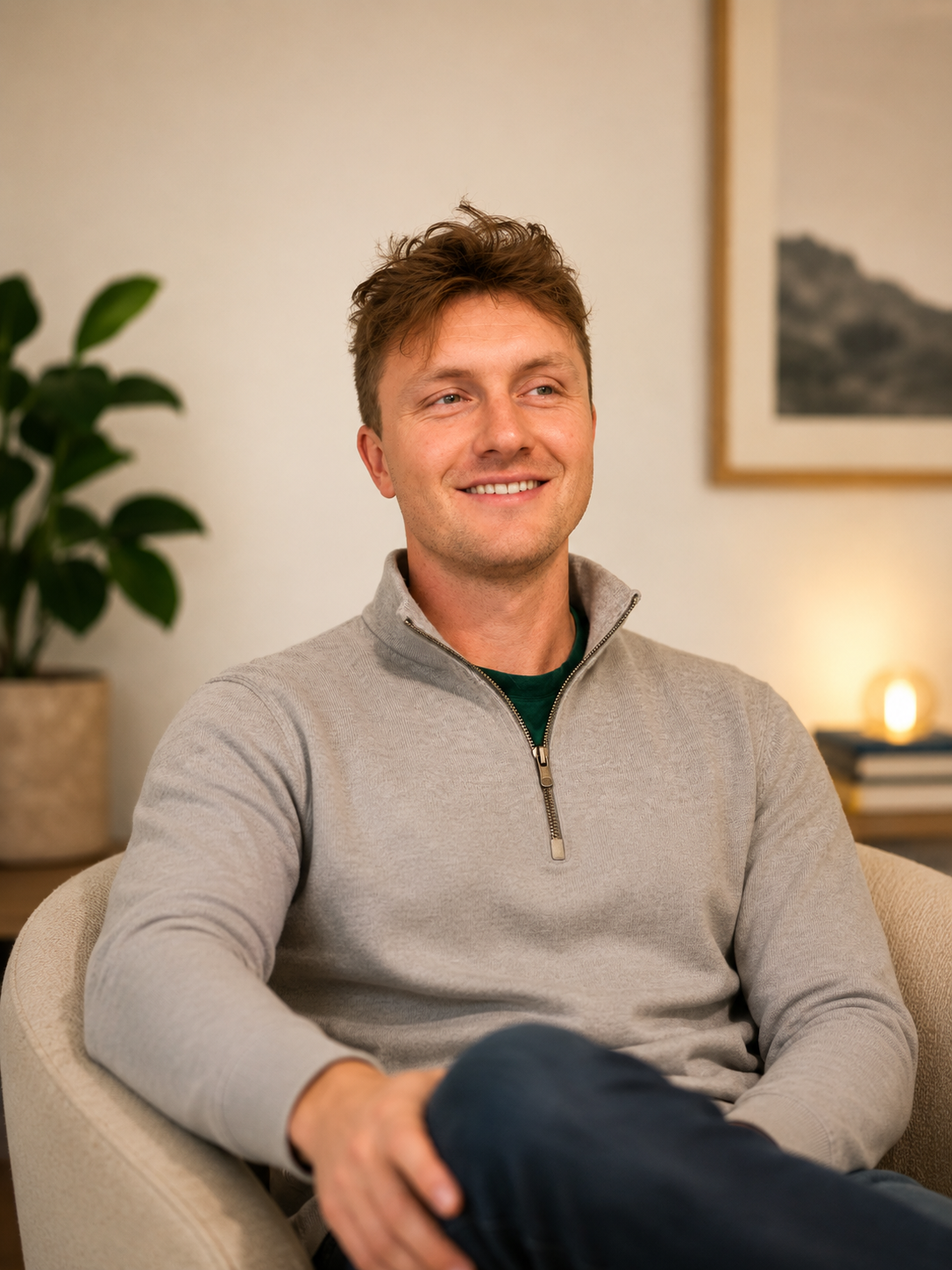
Hi, I’m Joel,
Eight years ago, I found myself trapped in a cycle of fear, negativity and self-doubt. My attention was constantly pulled toward what was wrong—my thoughts, my circumstances and the stories I believed about myself. Looking back, I realised I wasn't simply experiencing suffering; I was unknowingly reinforcing it through the way I saw the world.
That discovery changed everything.
Through years of studying and practising psychology, meditation, personal growth and Eastern philosophy, I learned that awareness isn't just another self-improvement tool—it shapes every aspect of our experience. The more clearly we see ourselves, our thoughts and our emotions, the more freedom we have to respond rather than react. Clarity replaces confusion. Acceptance replaces resistance. Life becomes something we participate in consciously instead of something that simply happens to us.
This understanding inspired me to start a YouTube channel dedicated to sharing the philosophy of See for Yourself—encouraging people to question assumptions, observe their own minds, and discover truth through direct experience rather than belief alone.
In 2022, I founded a men's mental health support group, creating a space where men could find their voice, speak openly about their struggles, and experience the healing power of genuine connection and shared understanding. Watching people grow through awareness, honest conversation, and community reinforced what I'd come to believe: meaningful change begins with learning to see clearly.
As a life coach and meditation teacher, my mission is to help you cultivate deeper levels of awareness as a foundation. Then help you break free from unconscious patterns, regulate your emotions, and build a life guided by clarity, intention and purpose.
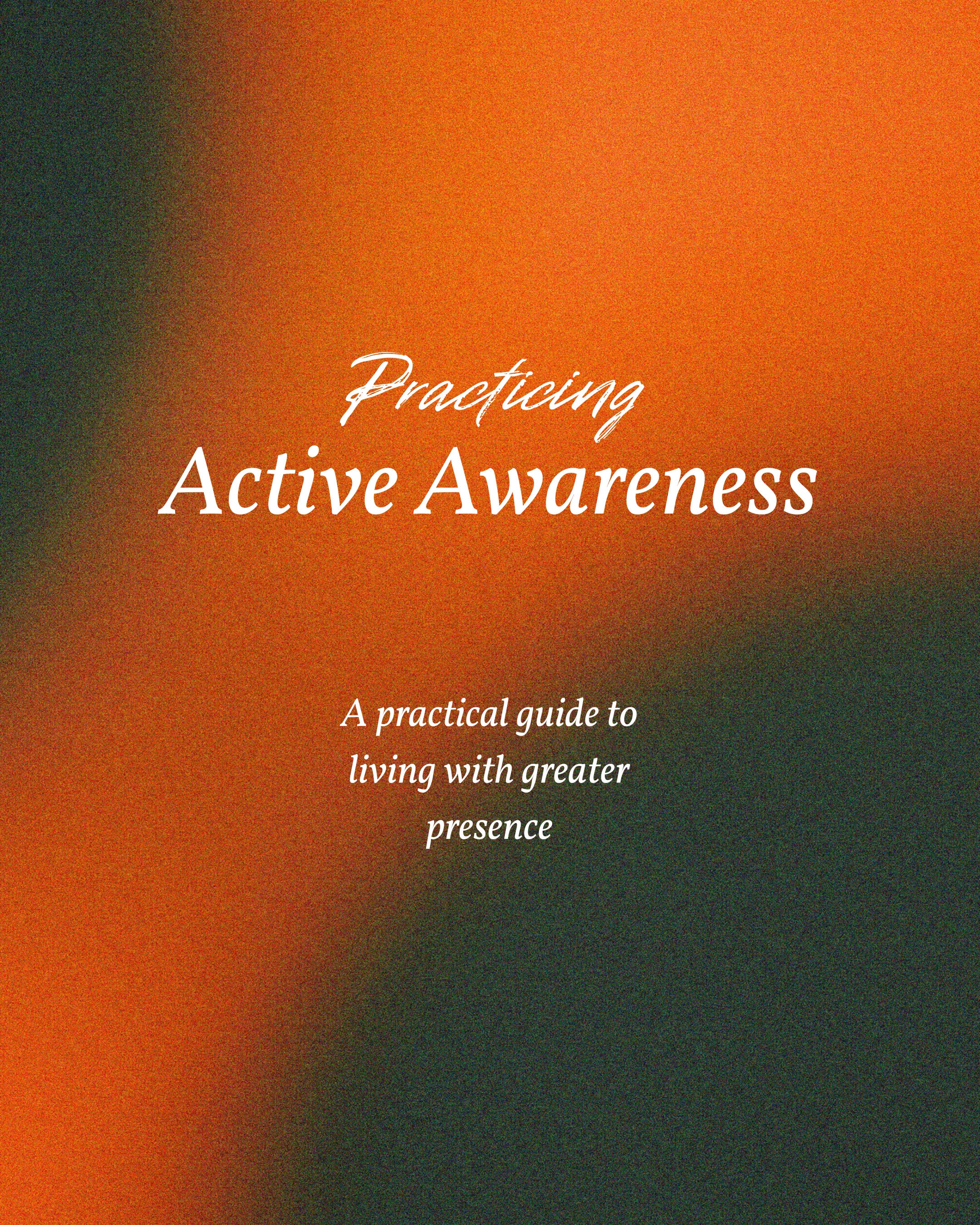
My approach: See, Feel, Move.
Every moment of your life is shaped by three fundamental capacities: how you see, how you feel and how you move.
Most of us move through life automatically. We think familiar thoughts, avoid difficult emotions and repeat habitual behaviours without ever becoming fully aware of what's happening. From this unconscious way of living come many of the struggles we experience: anxiety, disconnection, confusion and a lack of purpose.
The See. Feel. Move. framework is a simple guide for living with greater awareness, authenticity and intention. For me, these 3 words illustrate what it means to be human.
-
Everything begins with awareness. Before anything can change, it must first be seen.
Seeing is the ability to observe your thoughts, emotions, beliefs and behaviours without immediately reacting to them. Through mindfulness and meditation, I've come to understand that awareness is not fixed—it can grow stronger through practice. Intentionally exercising your capacity to observe is how you become less controlled by conditioning and more connected to reality.
-
To feel is to fully experience your present moment without resistance.
Many of us have learned to suppress, distract from or intellectualise our emotions. Over time this creates tension, numbness and disconnection. Feeling means allowing your emotions and bodily sensations to be experienced with openness, creating space for healing, clarity and genuine connection.
-
Awareness and feeling become meaningful through action.
Moving is taking intentional steps that reflect your values rather than your conditioning. It may be pursuing a meaningful goal, expressing creativity, making a difficult decision or simply bringing greater presence into everyday life as you do.
When you learn to See clearly, Feel deeply and Move consciously, life begins to unfold from a place of conscious choice rather than habit.
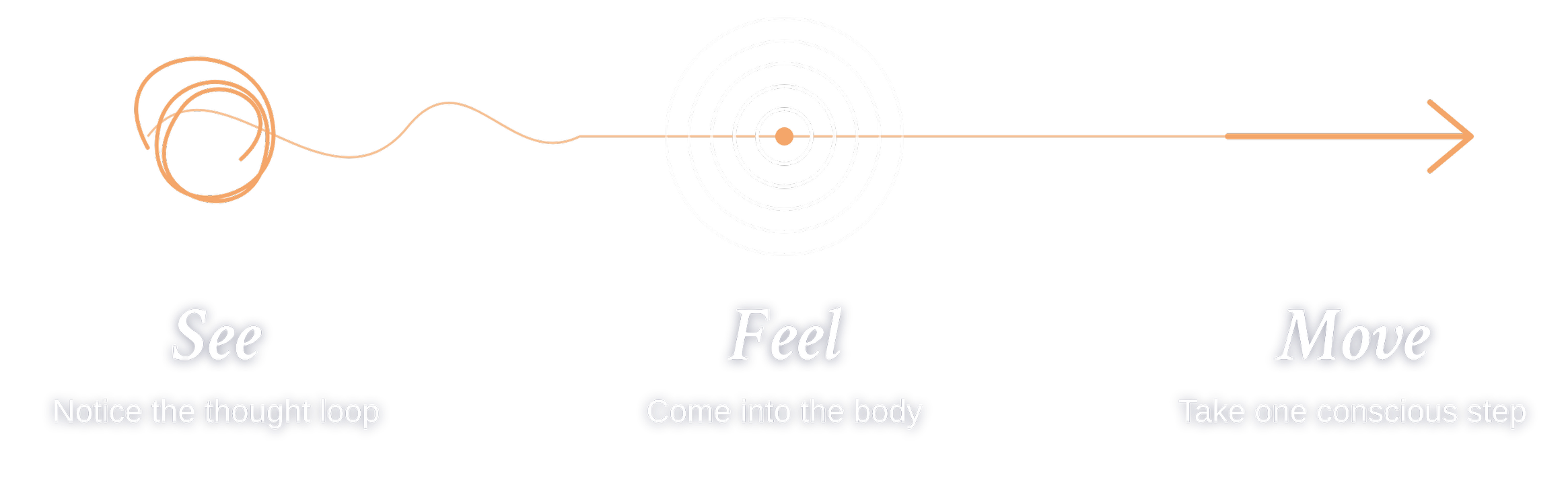
Free download: ‘Practicing Active Awareness’
Practicing Active Awareness is a practical PDF guide to help you slow down, notice what’s happening in your thoughts, emotions, body, and surroundings, and respond with more clarity and intention. Through simple reflections and exercises, it supports you in reconnecting with yourself, moving out of autopilot, and practice meeting life with more awareness, self-trust, and conscious choice.


See for Yourself is the philosophy that guides how I approach life and how I guide others.
To see for yourself means moving beyond second-hand beliefs and discovering life through your own direct experience. It is an invitation to question what you assume to be true, look beyond conditioning, and meet yourself and the world with curiosity, awareness, and an open mind.
When you become comfortable with not having all the answers, something shifts. You begin to see life with fresh eyes—not through the filter of past experiences, expectations, and beliefs, but through a deeper sense of presence and clarity.
From this place, life becomes an ongoing process of discovery. Each moment becomes an opportunity to learn, experience, and engage with the world more fully.
What is Meditation?
Meditation is often misunderstood. Some people associate it with religion, spirituality, or sitting cross-legged for hours. Others believe it's about emptying your mind, stopping your thoughts, or escaping from the world around you. But mindfulness meditation is much simpler — and much more practical.
Meditation is the practice of becoming aware of your experience, just as it is, without judging it, resisting it, or getting caught up in it.
It's learning to notice your thoughts without automatically believing them, feel your emotions without being completely consumed by them, and become more present with what's happening within you and around you.
It’s not about trying to stop thinking, or trying to feel calm. You simply begin by paying attention. Over time, this practice can help you recognise habitual patterns, respond more consciously rather than react automatically, and develop a clearer understanding of yourself.
What meditation is — and what it isn't:
Meditation is:
Pay attention to your present-moment experience.
Noticing thoughts, emotions and bodily sensations with greater awareness.
Making space between what you experience and how you respond.
Developing a more accepting, curious relationship with yourself.
Practising the ability to return to the present, again and again.
Meditation isn't:
Trying to empty your mind or trying to stop your thoughts.
Forcing yourself to relax, feel positive or achieve a particular state.
Escaping reality or avoiding difficult emotions.
About being perfect, peaceful or free from distraction.
Something you have to be religious or spiritual to practice
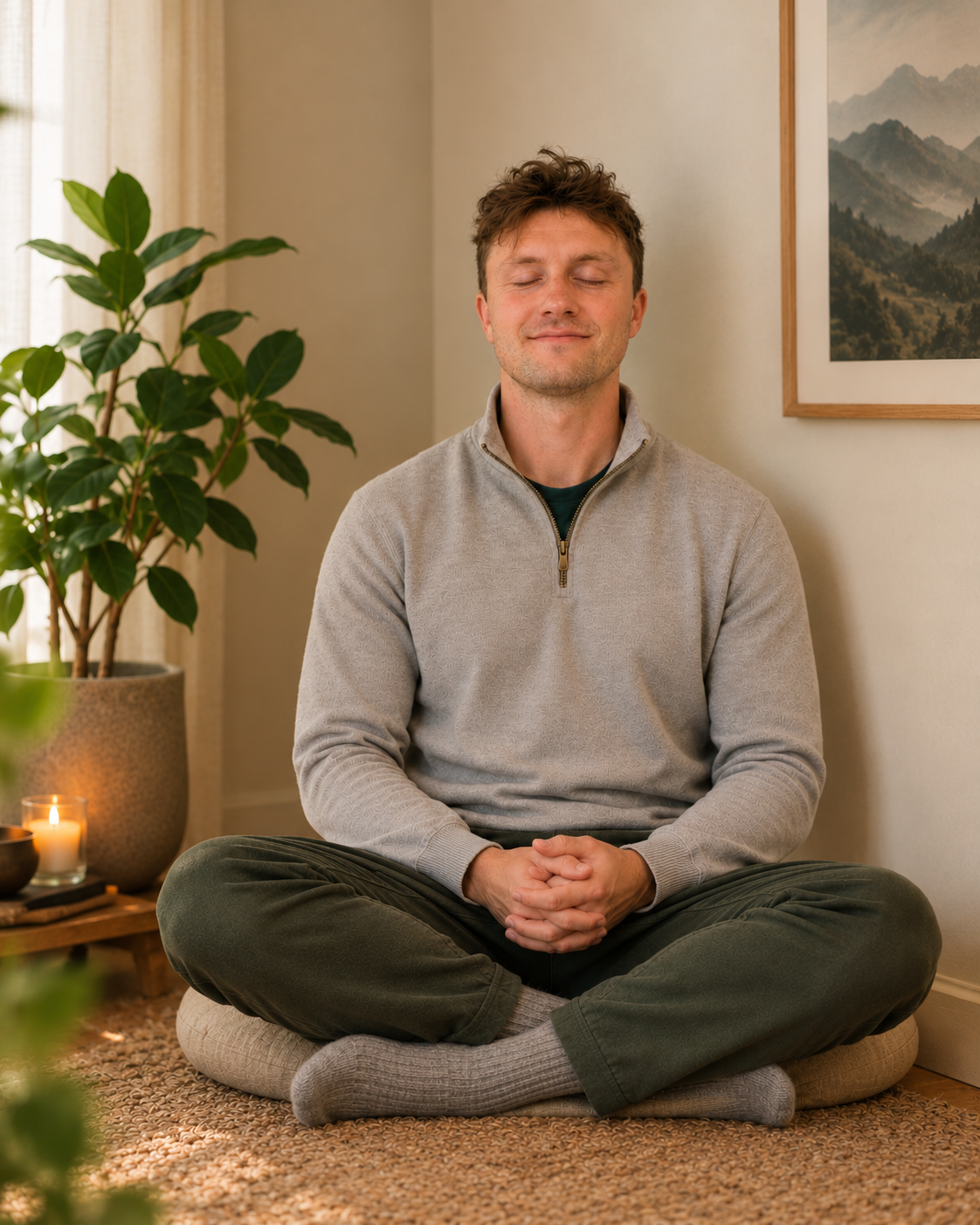
Why it matters
Much of how we experience life is shaped by patterns we don't always recognise — the thoughts we believe, the emotions we struggle with, and the reactions we've learned over time. When we're caught up in these patterns, it's easy to move through life on autopilot.
Meditation helps us slow down enough to notice what's happening. It gives us an opportunity to see our experience more clearly, understand ourselves more deeply, and discover that we may have more choice in how we respond than we realise. It doesn't make life's challenges disappear. It helps us develop a different relationship with them.
The anchor to my coaching
Mindfulness meditation is the foundation of my approach because meaningful change begins with awareness. Before we can change a pattern, we need to recognise it. Before we can respond differently, we need to notice how we're responding now. And before we can move towards a life that feels more aligned with who we are, we need to understand what's actually happening within us. This is where meditation and coaching come together.
See. Feel. Move.
See: Develop awareness of your thoughts, beliefs, habits and patterns, so you can begin to see yourself and your life more clearly.
Feel: Become more present with your emotions and bodily experience, learning to meet them with curiosity rather than automatically resisting or suppressing them.
Move: Use that awareness to make more intentional choices, work towards meaningful goals, and take practical steps towards the life you want to live.
Meditation helps create the foundation. Coaching helps you explore what you discover and put that awareness into practice. You don't need to have meditated before to work with me. You don't need to adopt a particular belief system or become someone different. It's about learning to understand yourself more clearly, experience life more fully, and move forward with greater intention.
Join the See for Yourself community
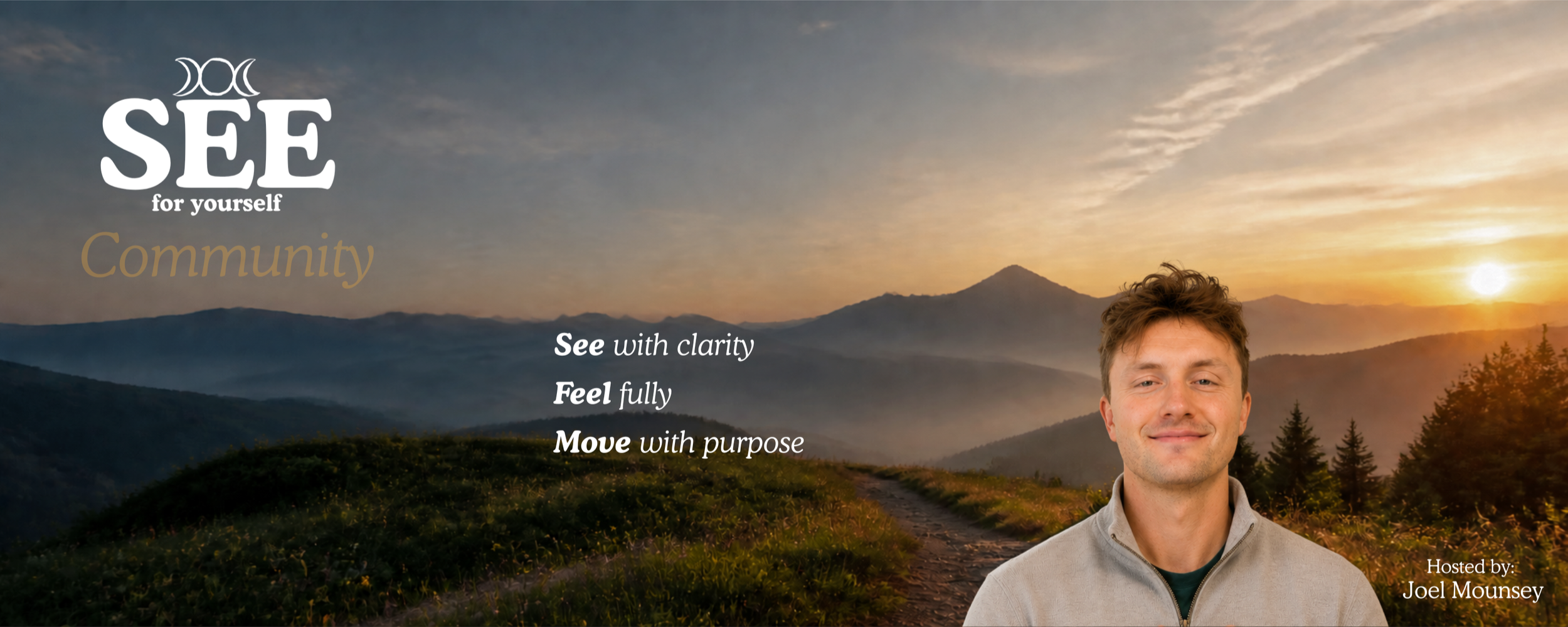
What to expect
Develop a grounded mindfulness meditation practice, with simple techniques drawn from a range of teachers and traditions, to help you become calm, grounded and present.
Weekly Q&A’s, guided self-enquiries, and meditations.
Self-enquiry tools and processes to understand your thoughts, emotions, behaviours, and the deeper patterns behind your suffering.
Learn how to meet difficult feelings with more awareness, so they no longer control your choices.
Share a supportive space with like-minded people who are also seeking more from life.
Build practical inner skills for navigating relationships, purpose, goals, and everyday challenges.
Begin moving beyond survival mode and towards a life guided by clarity, self-trust, purpose, and joy.
Frequently Asked Questions
Curious about coaching, meditation, or what See for Yourself is all about? Here are a few things you might be wondering. If there's something else you'd like to know, feel free to get in touch.
-
Life coaching is an opportunity to step back from the demands of everyday life, explore what's happening within you, and develop a clearer understanding of where you'd like to go.
Sometimes we feel stuck, overwhelmed, disconnected, or uncertain about what we want. Other times, we simply know there's more to explore.
Through conversation, reflection, and practical tools, coaching helps you develop greater awareness, navigate challenges, and take meaningful steps towards a life that feels more aligned with who you are and what matters to you.
-
Coaching is for anyone interested in understanding themselves better and living more consciously.
Perhaps you're feeling stuck, struggling with your emotions, navigating a difficult situation, or questioning the direction of your life. Maybe you're simply curious about personal growth and want to explore your potential.
You don't need to have everything figured out or arrive with a specific goal or issue. Sometimes, discovering what matters to you is where the journey begins.
-
My approach is centred around awareness, emotional understanding, and meaningful action.
I believe that lasting personal growth begins with understanding our experience rather than simply trying to change it. By developing awareness of our thoughts, emotions, behaviours, and patterns, we can begin to understand ourselves more deeply and respond to life with greater intention.
This is reflected in my See–Feel–Move framework:
See: Develop awareness and understand what's happening within you.
Feel: Learn to consciously experience and navigate your emotions.
Move: Translate that understanding into meaningful action and personal growth.
The intention isn't to give you another set of rules to live by, but to help you develop the understanding and confidence to find your own way.
-
See for Yourself is built around a simple idea: experience before belief.
We're constantly influenced by ideas, assumptions, expectations, and the opinions of others. While these can be valuable in certain cases, they can also prevent us from seeing things clearly for ourselves.
I believe there's tremendous value in slowing down, becoming aware of our experience, and exploring life with an open mind.
Rather than simply telling you what to believe or how to live, I encourage you to question, explore, and discover what you can understand through your own experience.
Ultimately, the most meaningful insights are those you come to see for yourself.
-
Not at all.
You don't need to follow a particular religion, adopt a spiritual belief system, or have any previous experience with meditation.
My approach is grounded in personal experience, awareness, and practical exploration. You can engage with these ideas in whatever way feels meaningful to you.
-
Coaching and therapy can both provide valuable support, but they generally serve different purposes.
Coaching tends to focus on self-understanding, personal development, navigating life challenges, and moving towards meaningful goals.
Therapy may involve clinical assessment and treatment of mental health conditions, psychological distress, or difficulties that require specialised care.
Coaching isn't a substitute for therapy or professional mental health treatment. If you're experiencing difficulties that require clinical support, I encourage you to seek help from an appropriately qualified professional.
-
Each session is shaped around you, your experiences, and what you'd like to explore.
We might discuss a particular challenge, explore recurring thoughts or emotional patterns, reflect on your values and direction, or work through practical strategies for moving forward.
There's no expectation that you need to arrive with the right answers. Sometimes the most valuable part of coaching is simply having the space to slow down, reflect, and see something from a different perspective.
My role is to support your exploration, ask thoughtful questions, and help you develop your own understanding.
-
Not at all. This is one of the most common misconceptions about meditation.
The mind naturally produces thoughts, just as the body naturally produces sensations. Trying to force these experiences to disappear can often create more frustration than awareness. However, as a result of consistent practice in mindfulness, the mind can slow down and stop altogether. This is what I have experienced from 8 years of practice every day.
Meditation is about learning to become more aware of what's happening within you, without automatically getting caught up in every thought, emotion, or sensation.
It's not about controlling every experience. It's about developing a different relationship with the experience that's already happening.
-
Meditation is one of the foundations of my approach to personal development. It is the most important part of my approach
I see it as a way of developing awareness — learning to observe our thoughts, emotions, and experiences without becoming completely caught up in them.
This awareness extends beyond formal meditation into everyday life, helping us understand ourselves more clearly, navigate our emotions, and respond to life's challenges with greater intention.
For me, meditation isn't simply something we practise for a few minutes each day. It's a foundation for living more consciously.
-
That's completely okay - and quite common.
Many people come to personal development with a sense that something isn't quite right, without necessarily knowing what needs to change.
You don't need to have a clear vision, a specific goal, or all the answers before beginning.
Sometimes clarity emerges through the process of slowing down, understanding yourself, and exploring what genuinely matters to you.
We can start wherever you are.
-
The best place to start is with an introductory coaching conversation.
It's an opportunity for us to get to know each other, explore what you're looking for, and discuss whether coaching might be a good fit.
There's no pressure or obligation to continue. It's simply a chance to have a conversation and see where it leads.